


After the restructuring, Viglacera’s two key manufacturing units immediately move to implement the strategy
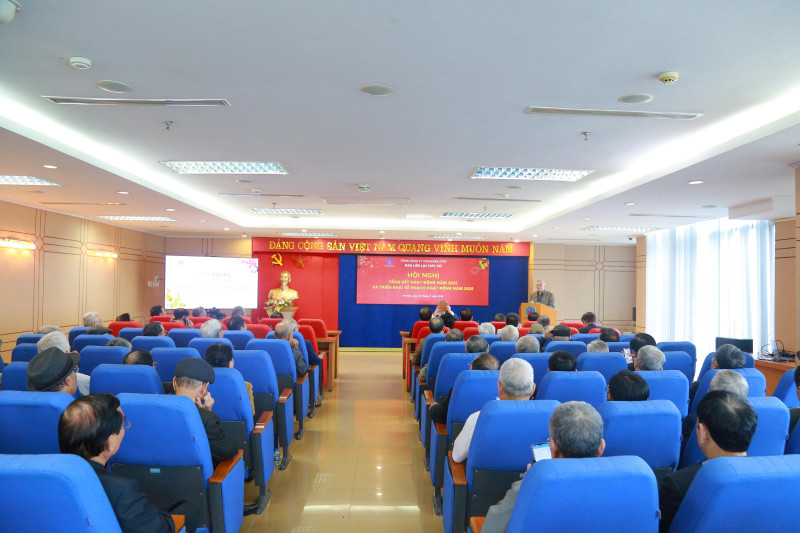
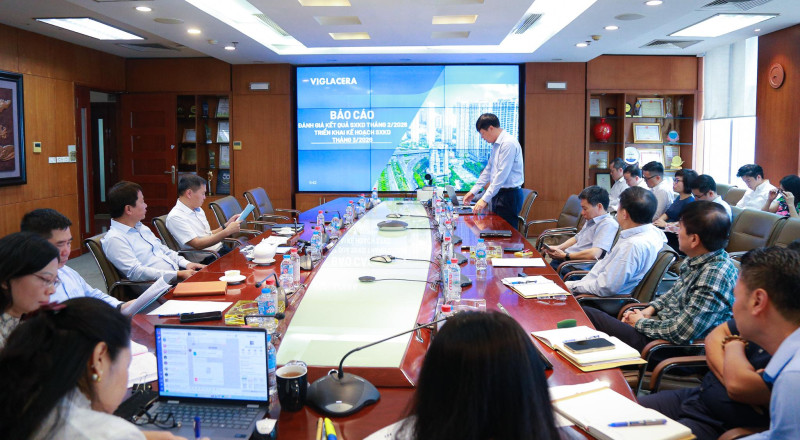
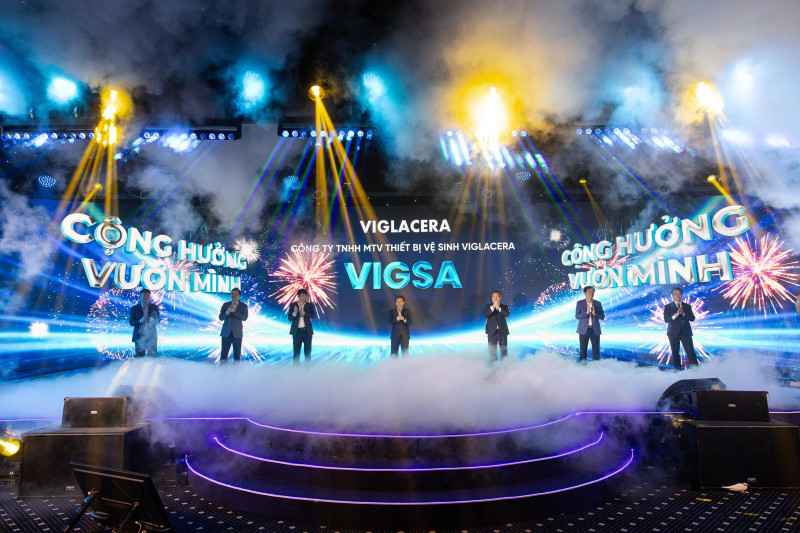
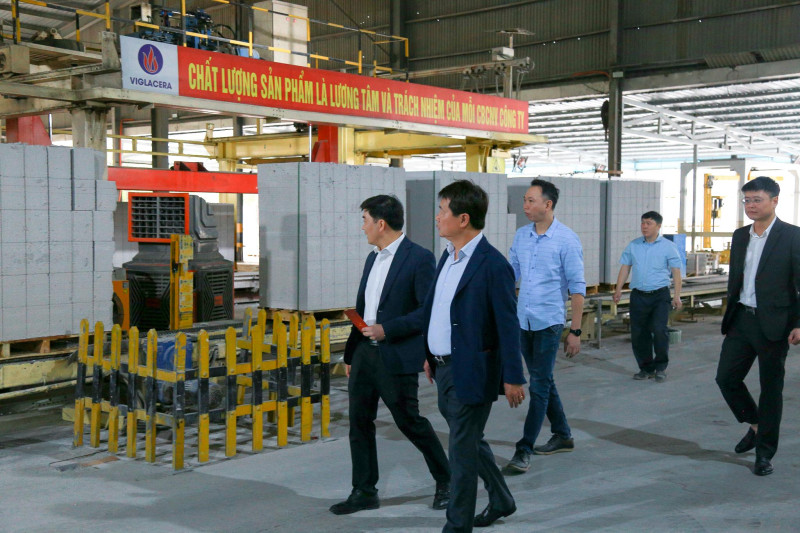
From the very first days of the 2026 planning year, the leadership of Viglacera Corporation held working sessions with Viglacera Tien Son Joint Stock Company and Viglacera Sanitary Ware Company Limited (Vigsa) to immediately begin implementing post-restructuring strategies. The meetings aimed to discuss in detail solutions for carrying out the 2026 plan tasks and those of subsequent years, in the context that the Corporation has completed the assignment of 2026 production and business targets to its units.
Therefore, these were not merely routine report-listening meetings, but opportunities for the Corporation’s leadership and functional departments to accompany the action plans of the two units, thereby contributing implementation measures and approaches to sustainable resource allocation in preparation for a new acceleration phase.
A prominent common feature of the two meetings was the focus on exploiting execution capacity after restructuring and following a series of investments in technological development, capacity expansion, and product quality improvement. This is also the context in which both units are currently bearing very significant responsibilities in production, business operations, and market development. These responsibilities will continue to increase as projects to enhance production capacity and scale proceed according to the 2026 plan, and further in line with the Corporation’s long-term development strategy, with the objective of becoming Vietnam’s leading building materials manufacturing group.
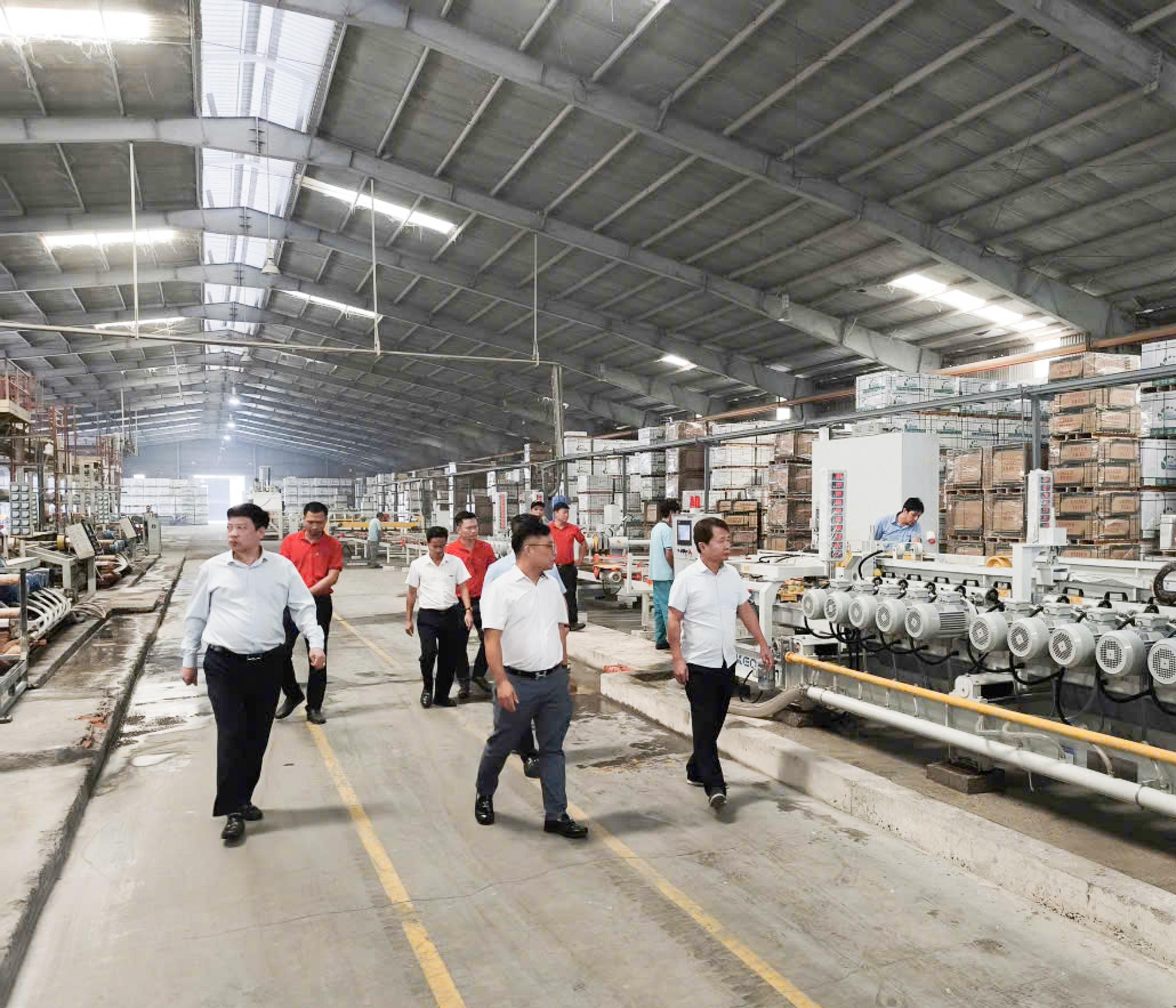
Restructuring and dual responsibility
Viglacera Tien Son Joint Stock Company and Vigsa have both completed important restructuring steps, forming two centralized production and business focal points of the Corporation in Viglacera’s two core business areas.
For Viglacera Tien Son, the new model places the Company in a central role, not only coordinating production but also directly taking responsibility for the consumption efficiency of a group of products in which Viglacera ranks among the top 20 in the world in terms of production scale.
In the sanitary ware sector, Vigsa has been reorganized on the basis of consolidating a series of manufacturing and commercial units, creating a large-scale centralized management structure, while at the same time placing very high demands on the executive and control capabilities of an enterprise whose sanitary ware production scale ranks among the top 27 in the world.
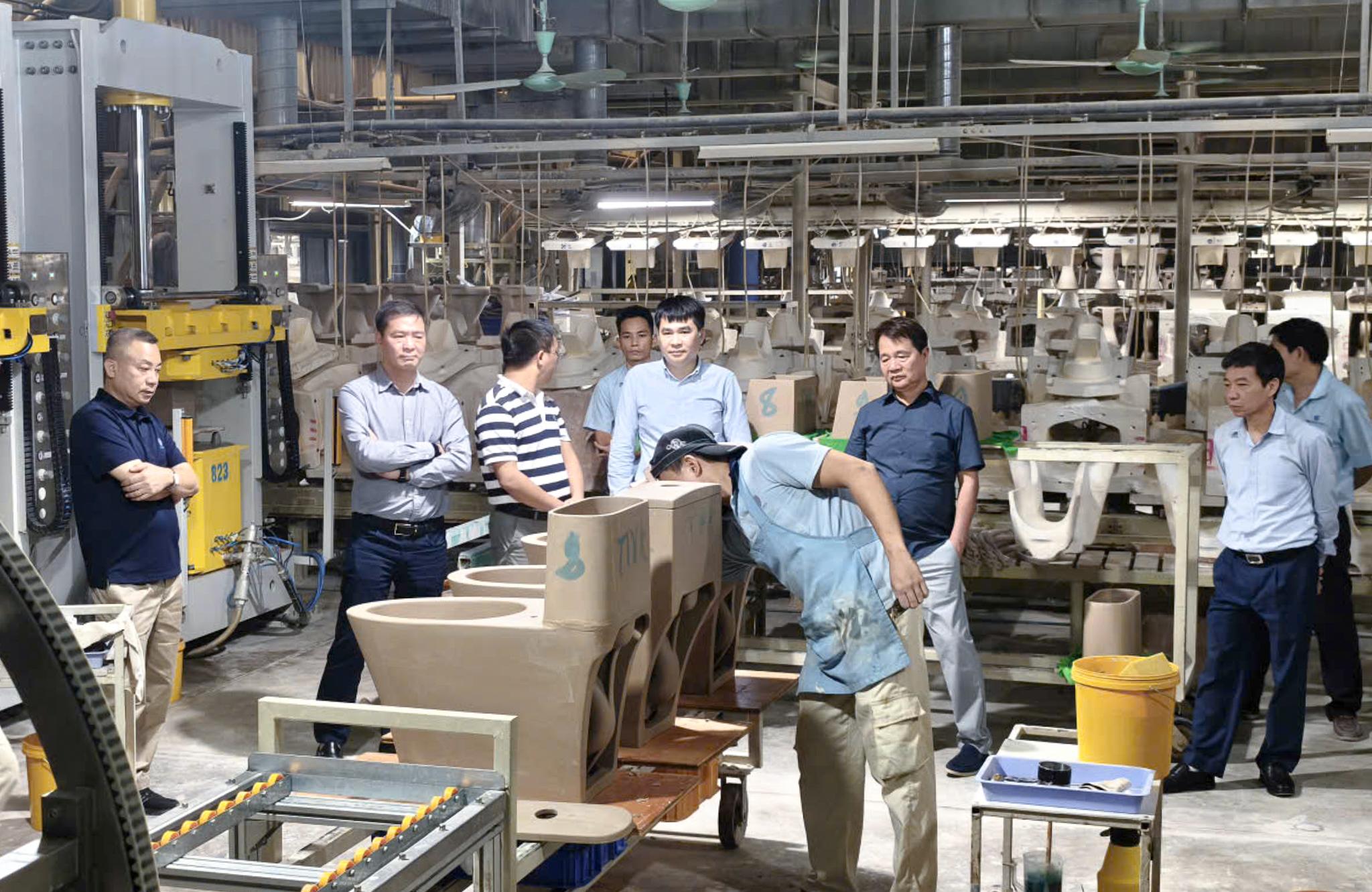
Previously, factories focused primarily on production and quality, while the sales of ceramic tiles and Autoclaved Aerated Concrete (AAC) were handled by Viglacera’s tile trading company; sanitary ware and faucets were managed by Viglacera’s trading company. After restructuring, both companies are now responsible for production, business operations, and development investment for the systems they manage.
This dual responsibility helps shorten the distance between production and the market, increasing operational proactiveness, but also becomes a clear test of the management capacity of the new apparatus.
Technology investment in parallel with multi-layered governance challenges
Both Viglacera Tien Son and Vigsa have just gone through a phase of foundational technology investment aimed at improving productivity, quality, and product stability. According to the orientation for the 2026 period and the following years, technology investment will continue to be intensified in depth, alongside the expansion of production scale.
Viglacera’s General Director Nguyen Anh Tuan emphasized to the leadership teams of the two companies: “The management apparatus must change its mindset and break away from operating habits of the old model. Company leadership and the business apparatus must be ready for new consumption scenarios, when increased output will reach a scale equivalent to one to two new factories. Moreover, solving the problem of increased output must be logically linked with cost optimization, cost reduction, and the creation of new values for competition in both domestic and export markets. The establishment of sample banks must be adequately invested in, in order to proactively respond to all market developments.”
At the working sessions, Chairman of the Board of Directors Tran Manh Huu required that effectiveness be measured by production and business results and the ability to adapt to market developments, not only on a monthly or quarterly basis but also from a long-term and sustainable perspective. Resources for development investment for both companies have been clearly identified; however, transforming those resources into measurable efficiency requires solving governance challenges from multiple angles simultaneously, from restructuring operating cash flows toward standardized practices, to appropriate investment in R&D, as well as inventory control measures in the context of increasing output, and so on.
The reason both the Chairman of the Board and the General Director emphasized the linkage between technology investment and production and business governance is that, for Viglacera, updating, innovating, and perfecting technology has always been a core factor determining sustainable growth in the medium and long term.
Returning to the implementation of the 2026 plan, sales is no longer a step that follows production.
Along with this, sustainability-related targets such as investment capital sources, provisioning policies, or more specifically, the detailed analysis of revenue sources, markets, and distribution channels, have been analyzed and refined through contributions from the Corporation’s leadership and functional departments.
From restructuring foundations to strengthened control
Overall, Viglacera Tien Son and Vigsa are entering a decisive phase. Therefore, in their business plan reports, the two units have adopted an approach of breaking down objectives to closely follow strategic orientation, along with establishing specific action axes.
For Viglacera Sanitary Ware Company Limited, General Director Le Anh Tuan outlined key solutions focusing on business and markets, particularly the export of selective and efficient products. In terms of production and investment, the implementation solutions adhere to the principle of emphasizing planning in order to produce according to orders and in line with market demand; unifying quality standards and clearly assigning production roles across all factories, while at the same time preparing resources for a new growth phase.
For Viglacera Tien Son Joint Stock Company, the report by the Company’s Director, Le Tien Dung, clearly identified seven specific task groups: cost reduction to lower product costs; improving recovery rates; implementing initiatives to maximize investment efficiency; promoting performance-based management mechanisms; ensuring inventory ratios meet standards; completing environmental management; and ensuring occupational safety and fire prevention and firefighting systems, with the ultimate goal of serving consumers by bringing to the market products of the highest quality.
At this stage, the capacity of the management apparatus is measured not by plans or determination, but by the ability to turn action axes into concrete cash flows, market share, and operational efficiency. General Director Nguyen Anh Tuan directed: “Production must be closely linked to the market; investment must go hand in hand with exploitation; growth must go together with control.” These requirements are not new, but they have become more urgent than ever in the context that the two units play a pillar role in two important building materials manufacturing segments of the Corporation. They are also the foundation for Viglacera to go further on the path of building a modern building materials manufacturing group with sustainable competitiveness in both domestic and international markets.